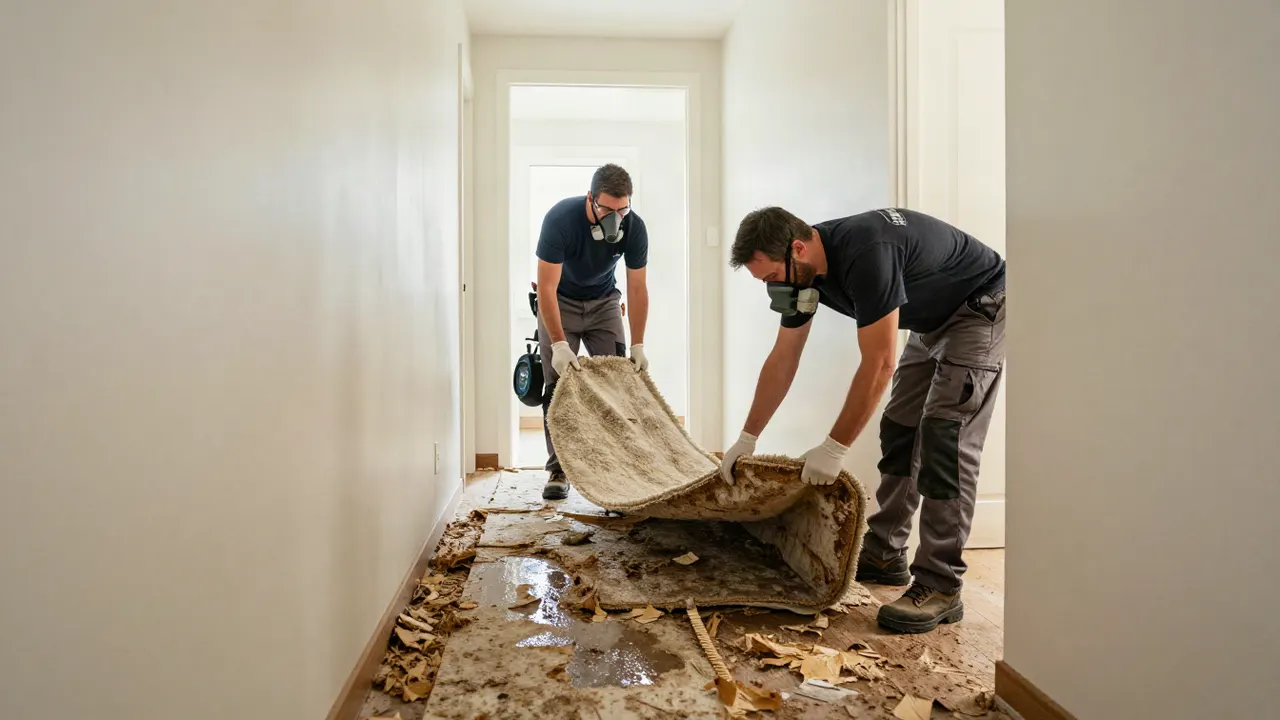
Why is my ceiling leaking water in Apache Junction
A ceiling leak in Apache Junction almost always traces back to your roof, your AC, or a plumbing line. Here is how to find the source and stop the damage fast.
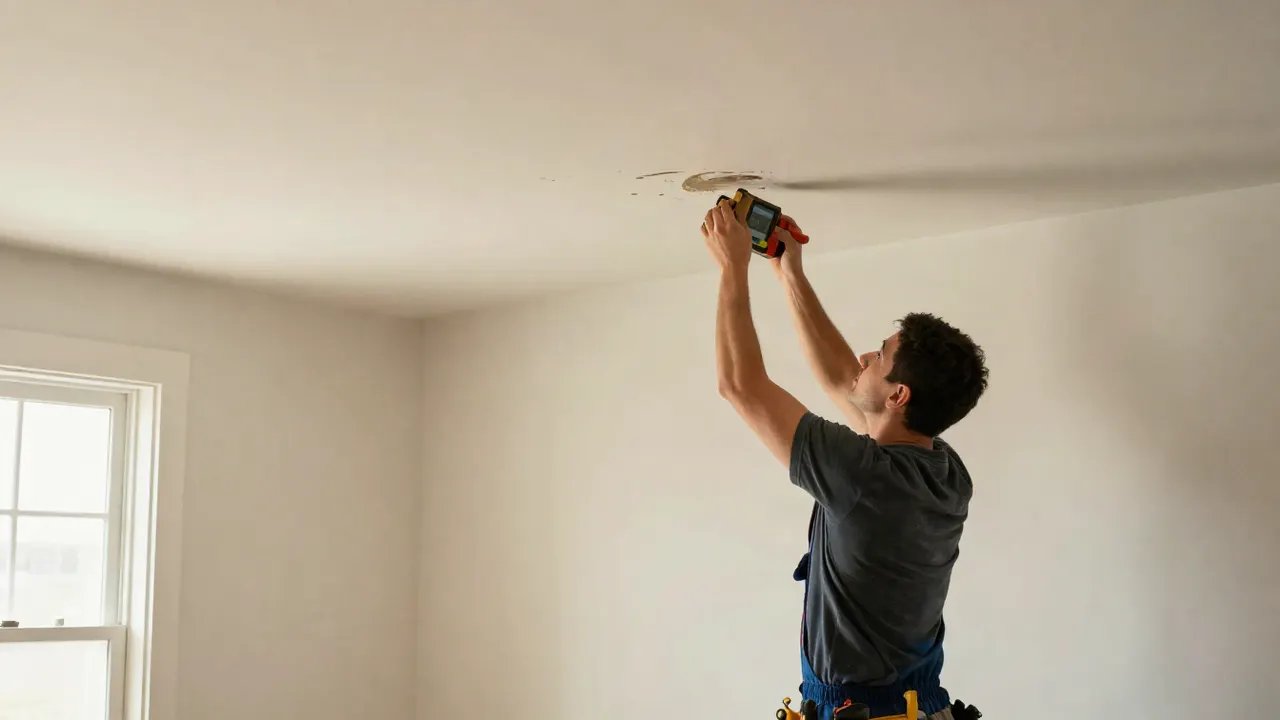
If your ceiling is leaking water in Apache Junction, the cause is almost always one of three things: a roof or flashing failure, a condensate line or drain pan from your air conditioner, or a supply or drain line running through the attic. The leak shows up on the ceiling because water travels along the framing before it finds a seam, a light fixture, or a drywall screw to drip through. This post walks through how to identify the real source, what repair costs look like in 2026, and when a ceiling leak has already done enough damage that you need a crew, not a bucket.
The short answer: why your ceiling is leaking
A ceiling leaking water in Apache Junction is a symptom, not the problem. The water is entering somewhere else and finding the path of least resistance down to your ceiling.
In our experience across Apache Junction, the source breaks down roughly like this:
- Roof or flashing failure - cracked shingles, lifted flashing around vents, or failed underlayment. This is the number one cause after a monsoon or a hard winter rain.
- AC condensate line or drain pan - extremely common in Arizona. If the condensate line clogs, the pan overflows and drips straight down through the attic.
- Plumbing supply or drain line - a pinhole leak in a copper line, a failed fitting, or a cracked drain in a bathroom above.
- Window or wall intrusion - water getting behind stucco during a wind-driven storm and traveling along the top plate.
If you see water coming through ceiling Apache Junction Arizona homes during or right after rain, start with the roof. If it happens on a dry, hot day, look at the AC first.
Why ceiling leaks spike in Apache Junction in the fall and winter
October through February is when we get the most ceiling leak calls in Apache Junction. The summer monsoon is over, but the fall and winter rains hit differently here - they are slower, steadier, and they soak into roofs that have been baking at 110°F all summer.
That heat matters. Asphalt shingles in Apache Junction take a beating from UV. By the time the first real winter rain arrives, shingles that looked fine in June can be brittle, curled, or missing granules. Flashing around vents and chimneys has often pulled away from the stucco. Water gets in, and the first sign you see is a brown ring on the ceiling.
We also see a second wave of leaks in December and January when homeowners run the heat for the first time. That first heat cycle expands attic framing and can open up a small gap that was sealed all summer. If your ceiling starts weeping the week you turn the furnace on, that is usually why.
If you live in an older neighborhood near Downtown, the housing stock is older and the roof penetrations are more likely to have been patched multiple times. We handle a lot of water damage in Downtown Apache Junction where a 1970s roof finally gives up after a wet December.
Up in the foothills, the issue is different. Homes in Superstition Foothills sit on sloped lots with complex rooflines, and wind-driven rain pushes water sideways into valleys and dormers that a standard roof inspection might miss.
How to find the source of a ceiling water leak
Finding the source of a ceiling water leak in Apache Junction starts with a simple rule: water runs downhill, but it rarely runs straight down. It follows framing, insulation, and pipe chases. The stain on your ceiling is often 3 to 10 feet away from the actual entry point.
Here is how we trace it:
- Check the attic above the stain. Look for wet insulation, dark streaks on rafters, or water staining on the underside of the roof deck. That tells you whether the leak is coming from above or from a pipe.
- Look at the AC unit. If the air handler is in the attic, check the drain pan and the condensate line. A clogged line is a 15-minute fix that a lot of homeowners mistake for a roof leak.
- Test the plumbing. If the attic is dry, the leak is probably a supply or drain line. We use a moisture meter and sometimes a thermal camera to map the wet zone without cutting open the whole ceiling.
- Check the roof from the outside. Look for lifted flashing, cracked boots around vent pipes, or missing shingles directly uphill from the stain.
If the ceiling is actively dripping, shut off the water to the house first if you suspect plumbing. If it only leaks during rain, you can wait for a dry day to inspect the roof, but do not wait on the drying. Wet drywall and insulation start growing mold in 24 to 48 hours in Apache Junction's indoor humidity.
How much does ceiling water damage repair cost in Apache Junction AZ?
Ceiling water damage repair in Apache Junction AZ runs about $350 to $1,200 for a small, contained leak, and $1,500 to $4,500 or more when the leak has been running for weeks and the insulation, drywall, and framing are all wet. Typical 2026 pricing in this area breaks down like this:
- Leak detection and moisture mapping: $150 to $350.
- Emergency water extraction and drying: $500 to $1,800 depending on how much area is wet.
- Drywall removal and replacement: $300 to $900 for a standard ceiling section.
- Roof repair or flashing: $250 to $1,500 depending on access and pitch.
- Mold remediation, if needed: $1,200 to $3,500 for a typical attic or ceiling cavity.
The biggest cost driver is not the leak itself - it is how long the water has been sitting. A leak you catch in the first 24 hours is a drying job. A leak you catch after a month is a rebuild.
If you need to get water out fast, our emergency water removal Apache Junction AZ team runs 24/7 and can usually be on-site the same day.
Can a leaking ceiling cause mold in Apache Junction Arizona?
Yes - a leaking ceiling in Apache Junction Arizona can grow mold in as little as 24 to 48 hours. Our dry climate helps, but the attic and the ceiling cavity hold moisture far longer than the outside air. Once drywall paper gets wet, it stays wet.
The mold you need to worry about is not the black stuff on the surface. It is the mold growing on the back of the drywall, on the insulation, and on the wood framing. By the time you smell it, the colony is usually well established.
Three signs that a ceiling leak has already gone moldy:
- A musty, earthy smell in the room, especially when the AC kicks on.
- Dark speckling or discoloration on the ceiling that does not wipe off.
- Allergy-like symptoms that get worse in that room and better when you leave.
If you are seeing any of those, do not just paint over the stain. The moisture source has to be fixed and the cavity has to be dried and treated. Our drying and dehumidification Apache Junction AZ service is built for exactly this - we dry the structure, not just the surface.
Common mistakes we see with ceiling leaks
The most common mistake with a ceiling leak in Apache Junction is treating the stain instead of the source. Here is what we see homeowners do, and why it backfires:
- Painting over the stain. Kilz hides the color for a few weeks. It does not stop the water, and it traps moisture against the drywall.
- Putting a bucket under it and waiting. A slow drip can put 5 to 10 gallons of water into your ceiling cavity over a week. That is enough to soak insulation and start mold.
- Assuming it is the roof. In Apache Junction, a huge share of ceiling leaks are AC condensate. Homeowners pay for a roof inspection when the real fix is a $150 drain line clearing.
- Not documenting the damage. Take photos before you clean anything up. Your insurance adjuster will want them.
- Running the AC harder to dry it out. That adds more condensate to the same line that may already be clogged. It makes the problem worse.
One more: do not assume a small leak is a small problem. Water follows the path of least resistance, and that path often ends at an electrical box or a ceiling fan. We have seen leaks short out fixtures three rooms away from the original stain.
When to call a professional
Call a professional when the leak is active, when the stain is bigger than a dinner plate, when the ceiling is sagging or soft, or when you cannot find the source within an hour of looking. Those are the four triggers.
If the ceiling is bulging, do not poke it. There may be 20 or 30 gallons of water trapped behind the paint, and a poke turns a repair into a flood. Turn off the power to that room at the breaker and call us.
We handle water damage restoration Apache Junction AZ from the first extraction through the final coat of paint. We find the leak, stop it, dry the structure, and put the ceiling back. One crew, one invoice, no runaround.
If the leak came from a storm and there is water across the floor too, that is a bigger job. Our flood damage cleanup Apache Junction AZ team handles the full scope - standing water, wet drywall, soaked insulation, and the rebuild.
Frequently Asked Questions
Why is my ceiling leaking water in Apache Junction?
The three most common causes are roof or flashing failure, a clogged AC condensate line, and a plumbing leak in the attic. In Apache Junction, AC condensate is the top cause on dry days, and roof failure is the top cause after rain.
How much does ceiling water damage repair cost in Apache Junction AZ?
Most ceiling water damage repairs in Apache Junction run $350 to $1,200 for a small contained leak. If the leak has been running for weeks and mold is present, expect $1,500 to $4,500 or more. Detection alone is usually $150 to $350.
Can a leaking ceiling cause mold in Apache Junction Arizona?
Yes. Mold can start growing on wet drywall and insulation in 24 to 48 hours. Apache Junction's dry outdoor air does not help once the moisture is trapped inside a ceiling cavity, so drying has to start fast.
Who do I call for a ceiling leak in Apache Junction?
Call a water damage restoration company that handles both the leak source and the drying. A roofer fixes the roof but will not dry your ceiling. We do both, plus the drywall repair, so you are not coordinating three trades.
Does homeowners insurance cover ceiling leaks in Apache Junction?
Most policies cover sudden, accidental leaks - like a burst pipe or storm damage - but not long-term neglect or slow leaks you should have caught. Document everything with photos and call your adjuster before you throw anything away.
Get help with water damage in Apache Junction
If your ceiling is leaking right now, we can be on-site today. We handle the full job - leak detection, water extraction, structural drying, and ceiling repair - so you are not juggling contractors while water is running down your wall.
Call Superstition Water Restoration at (325) 274-7080. We answer 24/7, and we will tell you on the phone what the next step looks like.